
Loads are use energy from the line to meet the requirements. The total power that comes over a power line is an Apparent Power. The portion of the energy available for use is that an Active Power. The part of the energy that is not suitable for use is Reactive Power. The energy which is not suitable for use is characterized as a kind of energy loss. It can be thought of as the power that causes the efficiency of the main energy to be lost by transforming the energy into the circuit with the magnetic field or similar energies. These losses can create negative effects such as voltage drop on energy-carrying lines. Since voltage and current are not synchronized in alternating current circuits, reactive power occurs. Active power is formed by resistors, and reactive power is formed by inductive and capacitive reactances. Reactive power is preserved by electronic circuit elements such as magnetic field-powered transformers or magnetic field motors. Therefore, reactive power is stored in the circuit as an electric or magnetic field.

The reactive power consumption of the device is determined depending on the phase shift between voltage and current. If the reactive power is increasing, the efficiency of the user device decreases. The transformer needs reactive power to produce the magnetic field. Therefore, it collects reactive power on the transformers. This has a negative impact on electricity bills. In electricity bills, penalties apply as reactive power consumption increases, so more money is paid. As a result, reactive power needs to be determined, balanced with active power, and precautions should be taken.
Active and reactive powers coexist in a circuit formed by using both resistance and reactance in the system. The close and balanced active and reactive power values represent the optimum operating range for the systems. Preventing the imbalance between active and reactive power enables systems to work more efficiently. It helps to control the power of the system and to obtain the results of the calculations to be made easily. It prevents the phase shifts in measurements and corrects cosθ angle.
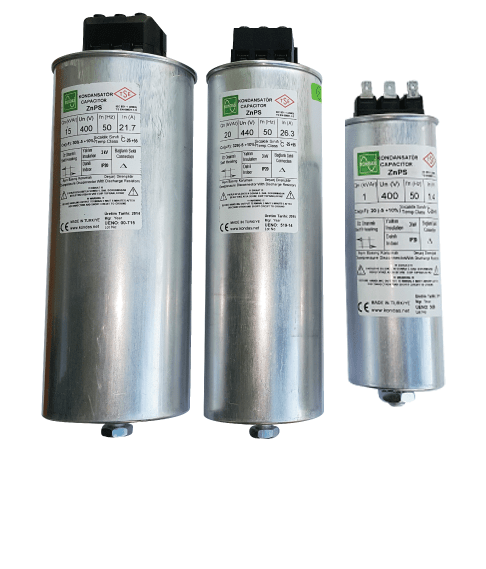
At this point, compensation panels are used to balance the active and reactive power. Compensation boards are the board where capacitors and measuring instruments are located to correct the power factor. Employing huge capacitors and inductors, the power is kept in balance by charging and discharging the energy. A capacitor produces reactive power while an inductive absorbs reactive power. When the reactive power increases, the capacitors work and some of the energy is stored. The stored energy is quickly consumed and inhibits reactive power generation. Likewise, when there is no need for active power, inductors quickly consume energy, thus increasing reactive power.
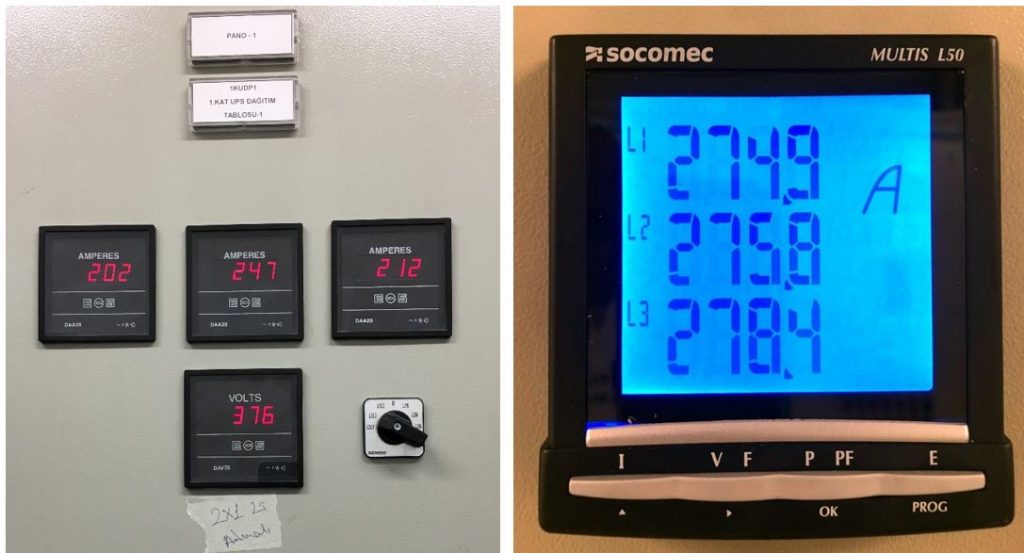
This change in the system can be followed through energy analyzers. In a three-phase system, all three incoming voltage values are expected to be close to each other. If there is a fault in the system, then the phase angle is shifted and as a result, reactive power is formed. In addition, the fact that the consumed power is less than the expected values again indicates a phase shift in the system. In this case, necessary checks should be made. First, the analyzer values should be checked and then the active and reactive power in the panel should be balanced.
