

Ethernet is the standard communication protocol used for devices to communicate with each other in wired or wireless networks. It is located in the physical layer, which is the first layer of the OSI reference model. Ethernet is a proven networking option that delivers speed, productivity, and control. Because it works the same on both LAN and WAN.
Ethernet initially emerged as a technology that enables two devices to communicate by connecting them over a cable. Today, it continues its development on very complex structures. It takes its name from the ether theories in physics.
Metro Ethernet is a technology that enables packets to be transported end-to-end at high speed. It is offered to users with its advanced internet infrastructure that provides much faster transmission compared to ADSL and VDSL services used today. The fiber incoming line can be converted into a copper line and distributed within the network with a structure similar to GPON with the use of Metro Ethernet Switch devices.

It is used to connect users to larger services or to the Internet. Metro Ethernet is preferred in areas where internet usage is intense. It is used in medium and large-sized companies to increase the quality and speed of communication, as well as to connect offices located in different locations of the same company. Thanks to its flexible and high bandwidth, the communication is kept active by losing the effect of kilometers between locations.
Metro Ethernet is provided by defining a separate line to the customer over fiber optic cables. Thus, problems such as slowdowns and interruptions do not affect the user. According to the customer’s preference, the data transfer rate can be determined. Data transfer rate can be increased from Mega values to Giga values. In addition, Metro Ethernet provides the possibility to send symmetric data. Symmetrical connection is a connection type where download and upload speeds are equal. Symmetrical connection service is provided over fiber optic cables. At the same time, thanks to the symmetrical connection, there is no bottleneck in the internet line.
In xDSL services that work asymmetrically, there may be a problem when downloading and uploading at the same time. The reason for this is that the line becomes available for a single transaction temporarily due to a bottleneck on the line. In order to perform the remaining transactions, the current transaction must be completed. Thanks to the use of the symmetrical connection, this problem does not occur.
Metro Ethernet provides services with a much faster and more advanced internet infrastructure than ADSL and VDSL services that are frequently used today. The biggest difference compared to ADSL and VDSL services is that the connection is provided symmetrically at high bandwidth over fiber optic cables. Thanks to fiber optic cables, very low latency and high download and upload speeds can be achieved.

There is very low latency in communication even if the distance between locations is large via Metro Ethernet. It simplifies all network solutions as it can adapt to the connections in the infrastructure. Metro Ethernet topologies are less complex. Installation and hardware costs are low. It provides an optimum level of reliability. Factors such as bandwidth and speed can be increased thanks to the scalable service. Thus, it comes to the fore with the speed and reliability factors that corporate centers usually need.
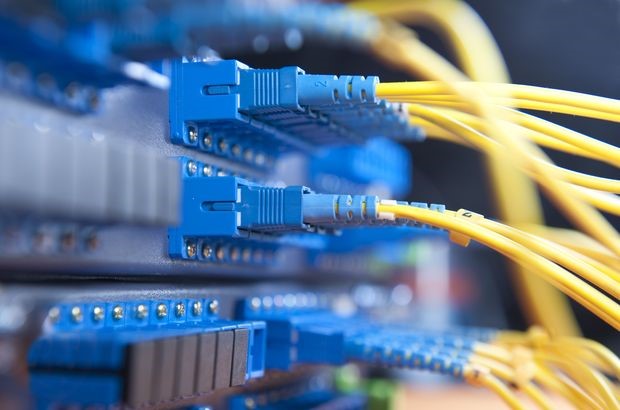
In addition, operation, maintenance, and fault detection are very difficult in the use of copper cables. It can result in high losses for end users. In fiber use, the use of cables is very sensitive, but fault detection and repair are faster than copper cables. It is not mandatory to use router devices such as routers or switches in order to benefit from the Metro Ethernet service. The same service can be used with a Fiber-Copper converter to be used.
