

POINT-to-POINT – It is a data transfer method that provides point-to-point access and communication between two devices with one or more cables.

BUS – It is a communication connection type that provides one-way or two-way communication of devices via a common line like a busbar. It is the situation where all devices in the system are connected to a single line and it provides data communication with each other via using the main line.
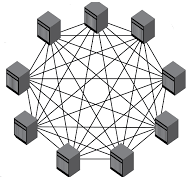
FULL MESH – It is the topology in which all devices in the system have a point-to-point communication line with each other. The biggest advantage is that the redundancy in the transmission is at the highest level and the traffic does not occur much. It Is much costly and can cause collisions in transmission.
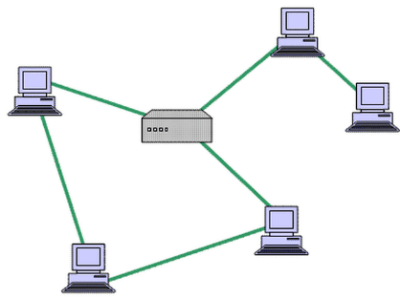
MESH – It is the topology in which is a few of the devices in the system have Full Mesh-like connections with each other so as to provide partial redundancy. It is generally used for the connection of high-importance devices such as authorized users or servers. Also, it makes balance the traffic that will occur.
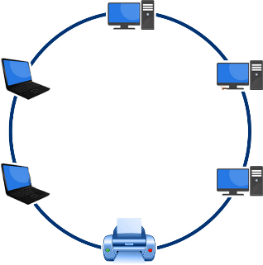
RING – It is a type of topology that is the devices in the system connect with each other by transferring data over each other. It is very low cost, but data flowing over devices can cause serious problems by increasing traffic and the possibility of collision, as well as violating data security.
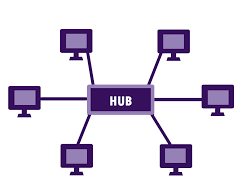
HUB and SPOKE (Star) – It is the type of topology that provides the connection to users through the main device located in the center. The central device is in the position of a distributor. It keeps the incoming data in its memory by preventing the formation of traffic and to whom it will be forwarded. However, it does not provide redundancy for users. Also, if there is high traffic in the system, the main device can congestion.
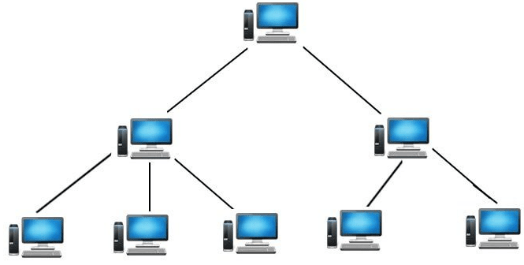
TREE or HIERARCHICAL – It is the topology that devices are connected to each other hierarchically. While the device with the highest priority stands at the top of this topology, standard users are at the bottom. There is a top-down situation in the form of Core – Distribution – User. Redundancy is not available. A similar structure can be captured when looking at large topologies from bird’s-eye view, and this structure is often called Core – Distribution – Access.
WHICH TOPOLOGY SHOULD I CHOOSE? ACCORDING TO WHAT?
First of all, the topology selections must meet the demands of the customer and be cost-effective. After meeting these conditions, there are a few things to consider. These;
- Main devices in the backbone must be both device and cable-based redundant.
- The number of users, the number of distributor devices, and the existing IP pool should be considered.
