The material that transmits electric energy, that connects the circuit elements to each other via electrical current, also that is used for signal transmission, that includes one or more cores, and that is wrapped in an insulating cover is called a cable. Cables are consist of two different parts as an insulator and a conductor. Thanks to the cable insulation provided in the dielectric part, the cables are not affected by atmospheric events. Types of cables are differentiated from each other according to certain parameters such as current carrying capacity, signal carrying capability, voltage drop, and potentially short circuit current. It is selected depending on the usage area, standards, or requirements you need. In this article, the types of cables, which are used mainly in data transmission and telecommunication infrastructure will be mentioned.
- Copper Cable

Copper cables are a type of energy cable, also known as power cables. It provides the operation of many devices and circuit elements by transmitting the electrical energy in the circuit. The energy to be transported is selected depending on parameters such as the protocols of the geographical region, mechanical stresses, external factors, and usage area. The transported energy can be transmitted with the over of different connectors. The connector structure is, on the other hand, ensures that energy is transported efficiently and according to standards due to region. The copper cables are separated according to their structure, there are two different types.
NYA
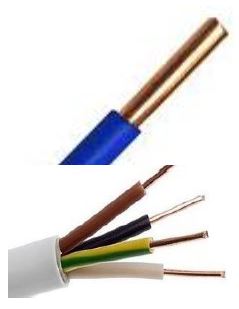
That is the most preferred cable type among copper cables. The cable contains only one main core of wire and is cost-effective. It is used in electronic device connections, building installations, and various household appliances.
If there is more than one NYA cable in a PVC sheath, this group is called NYM or NVV cable. It is used in places that need high voltage or have three phases. It is a type of cable suitable for underground use and resistant to external factors and moisture.
NYAF
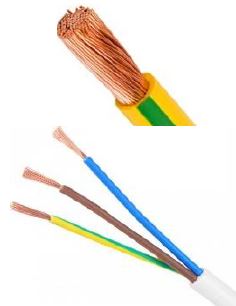
That is a type of cable that contains more than one wire group inside of the cable shield. It usually has a thin structure. It is used in areas where flexibility is needed. It is used in water installations, kitchens, and electrical panels.
If there is more than one NYAF cable in a cable group, this group is called TTR cable.
- Data Transmission Cable
Data cables are used to communicate between systems such as servers, personal computers, and other hardware. It carries a signal, an electrical signal for transmitting data. Fiber optic cable, Coaxial cable, and twisted pair cable are examples of data cables. Data transmission cables are divided according to usage area and performance levels. Using the right cable according to the application area provides high efficiency.
Fiber Optic Cable

Fiber optic cables are preferred for faster data transmission today. For the data transmission, glass and infrared laser beams are used. It has a light, sensitive, and very fragile structure since glass is used by the transmission material. Data is transmitted from one point to another point by means of laser light. There is no signal propagation in light transmission and which provides a great advantage as it prevents the occurrence of electrical noise. Also, conduction is not affected by humid and electrical magnetic field noise. Transmission is provided over long distances with almost no data loss. Thus, the cable cost is high. Special equipment must be used to ensure transmission, it is like SFP or something like that. While the highest data rate that copper cables can reach is 40Gbps, this speed can go up to 400Gbps in fiber optic cables.

There are two types of fiber optic cables used today, multimode and single-mode. In multimode fiber optic cables, light can choose more than one path in transmission. In single-mode fiber optic cables, light is transmitted over only one path. So the diameter of single-mode fiber light is much smaller. The use of single-mode fiber optic cable is preferred for high-dimensional data transfers.
Single-Mode Optical Fiber
It is one of the highest-capacity fiber optic data transfer cables known. Data transmission is carried out over a single path. The transmission path has such a small radius that the light can travel without refraction. All beams, therefore, use the same path in transmission and arrive from one end of the fiber optic cable to the other at approximately the same time. Transmission is achieved by means of laser light. There is no diffusion, thus achieving more data carrying capacity while experiencing less loss. It is the most preferred type of fiber optic cable.
Multimode Optical Fiber
It is a type of fiber optic cable that performs data transmission over multiple paths. It is used for short-distance data transfers. Transmission is provided by the LED light. There are two different types, Step Index and Grade Index. Rays are transmitted depending on their refractive indices. The refractive index of a substance is a coefficient that shows how slow the light or other electromagnetic waves traveling through that substance move compared to the light traveling in space. As light passes from one substance to another, its frequency does not change. A ray that passes between two media with different refractive indexes undergoes refraction.
- Step Index
Step Index has a structure similar to the Single-Mode working structure. The transmission path is quite wide, the rays continue to transmit by reflecting with sharp refractions depending on the refractive indices. Some of the rays that hit the insulator boundary at critical angles disappear. Since the light path is wide, there are different paths that a ray can follow. Thus, the rays may not follow the same path and travel the distance from one end of the fiber to the other at the same time.
- Grade Index
Grade Index has a transmission associated with the structure of the fiber cable. The light path in the center has a higher refractive index (almost parabolic structure) than the parts closer to the insulator. The refractive index decreases with each distance from the center towards the insulator. For this reason, rays travel in the form of a sine wave. A ray traveling closer to the center always travels less because here the index of refraction is large. A ray traveling closer to the insulator always travels further because the index of refraction is small here. Therefore, all lights converge at certain nodal points.
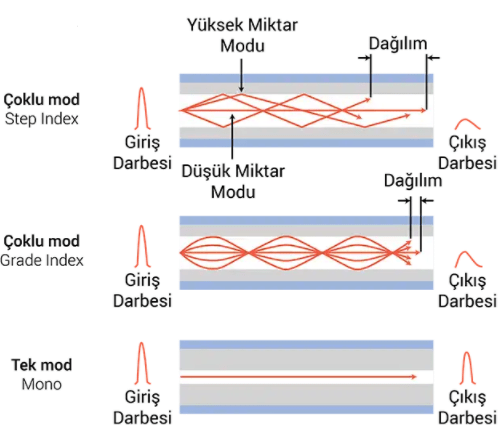
In summary, in the comparison of single-mode and multimode fiber, it can be concluded that a single-mode fiber cabling system is widely used in long-distance data transmission applications. With single-mode fiber, much greater speeds can be achieved with the aid of laser light. Very high speeds cannot be expected with multimode fiber and transmission is provided with the help of LED light. In addition, multimode fiber cable has shorter distance access and is widely used in enterprise applications, data centers, and local networks.
Twisted Pair
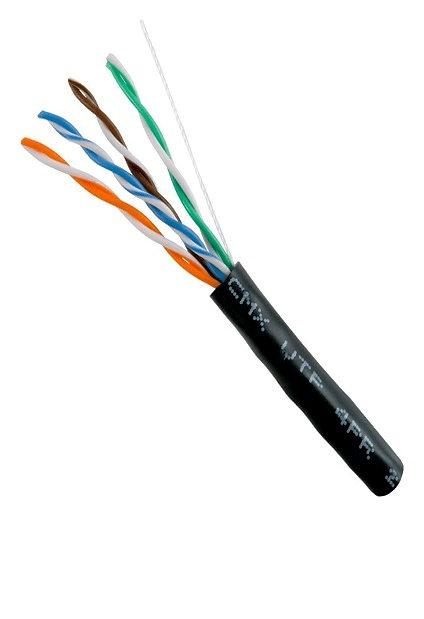
Twisted Pair cables are generally used in areas with computer and telephone infrastructure. Using more than one set of cables ensures that the incoming signal is transmitted without distortion. In order to be less affected by external influences, in addition to the insulation of the inner cables, all cables are surrounded by insulation. The data to be transmitted is sent as analog signals over copper wires. It can be protected or unprotected. It is the most used cable type in the physical layer from the OSI layers. Its cost is low. Ethernet cable is also a kind of twisted pair cable. It has different types according to the bandwidth it provides. Multiple lines can be run over the same cable system. The maximum cable length should be around 100 meters for the signal to be transmitted without distortion. Today, it leaves its place to fiber optic cables.
Coaxial Cable

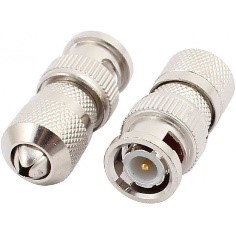
Today, it is used in television and satellite communications, in the transmission of radiofrequency waves. Coaxial cable consists of four different cross-sections. It consists of a live large wire that provides data transmission in the innermost part, an insulator protecting the signal transmission, a braided armor on the insulator, and the outermost insulating protective sheath. This armor consists of grounded braided wires surrounding the insulator. The grounding of the braided structure prevents the coaxial cable from being affected by devices or cables that generate electromagnetic fields. This structure allows coaxial cables to be more elastic than other cables of their own thickness. Coaxial cabling requires a special connector called a BNC connector. The current that the coaxial cable usually carries is a very high-frequency current such as VHF or UHF.
CAT
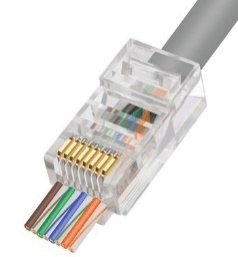
CAT cables are also known as Ethernet cables. It is used for data transfer in computer technologies and communication services. Depending on the desired performance, specific bandwidths, and usage areas, there are types such as Cat5, Cat6, Cat7. These species are similar in structure to each other, but they are not the same.
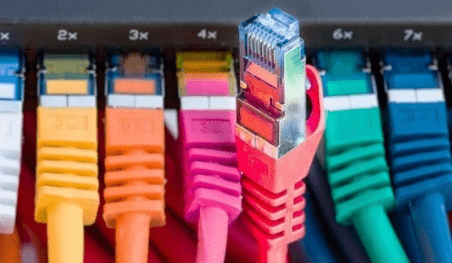
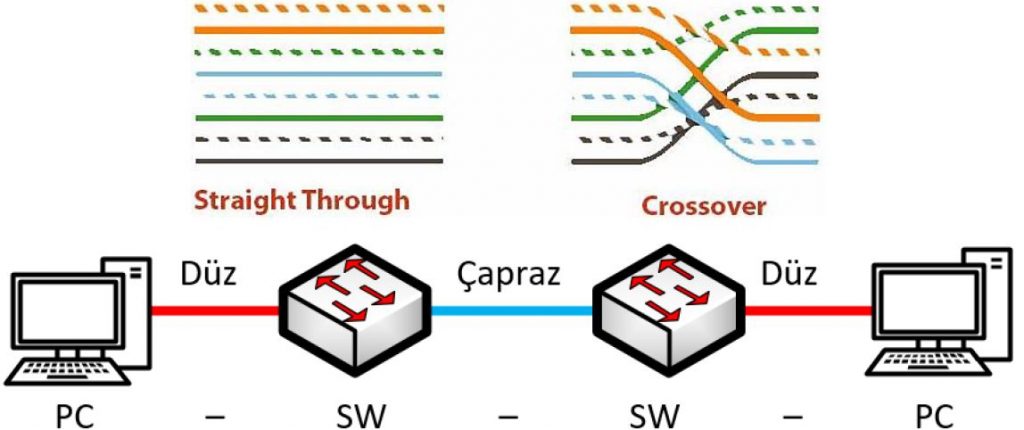
A CAT cable contains a Twisted Pair UTP cable. There are 8 live ends in total. 2 of them are used for data transmission, 2 for data reception, and the remaining 4 for the power lines. CAT cables are always used through connectors called RJ45, which have 8 metal ports. For both ends of a CAT cable, the cables can be inserted crosswise and straight into the RJ45 connector.
Accordingly, in straight connections, the wire at one end ends at the same numbered pin at the other end, at which metal connection point it started. It is used for the communication of two different types of devices in straight connections. In cross-connections, it is used only if two same devices are to be communicated with each other.